
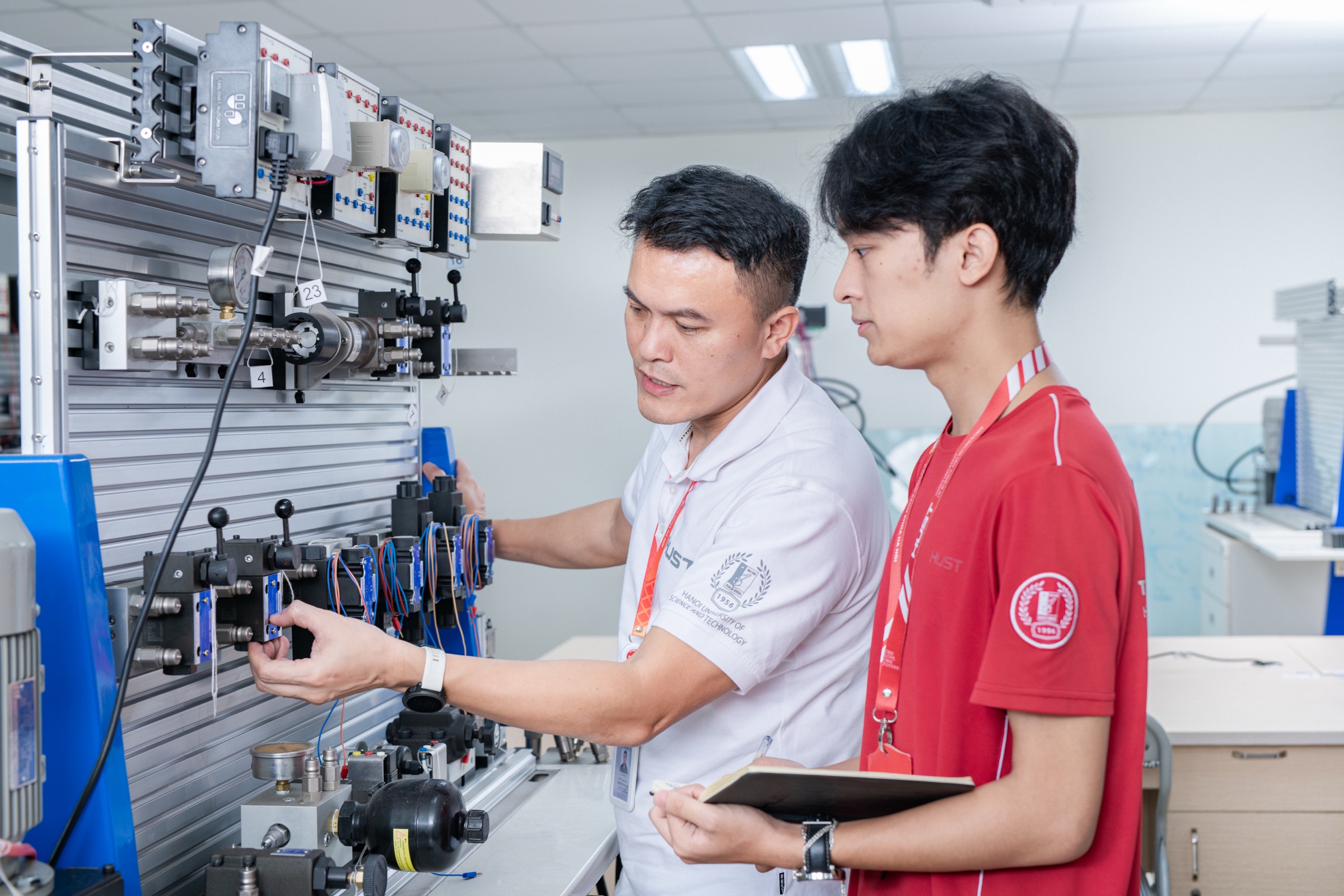
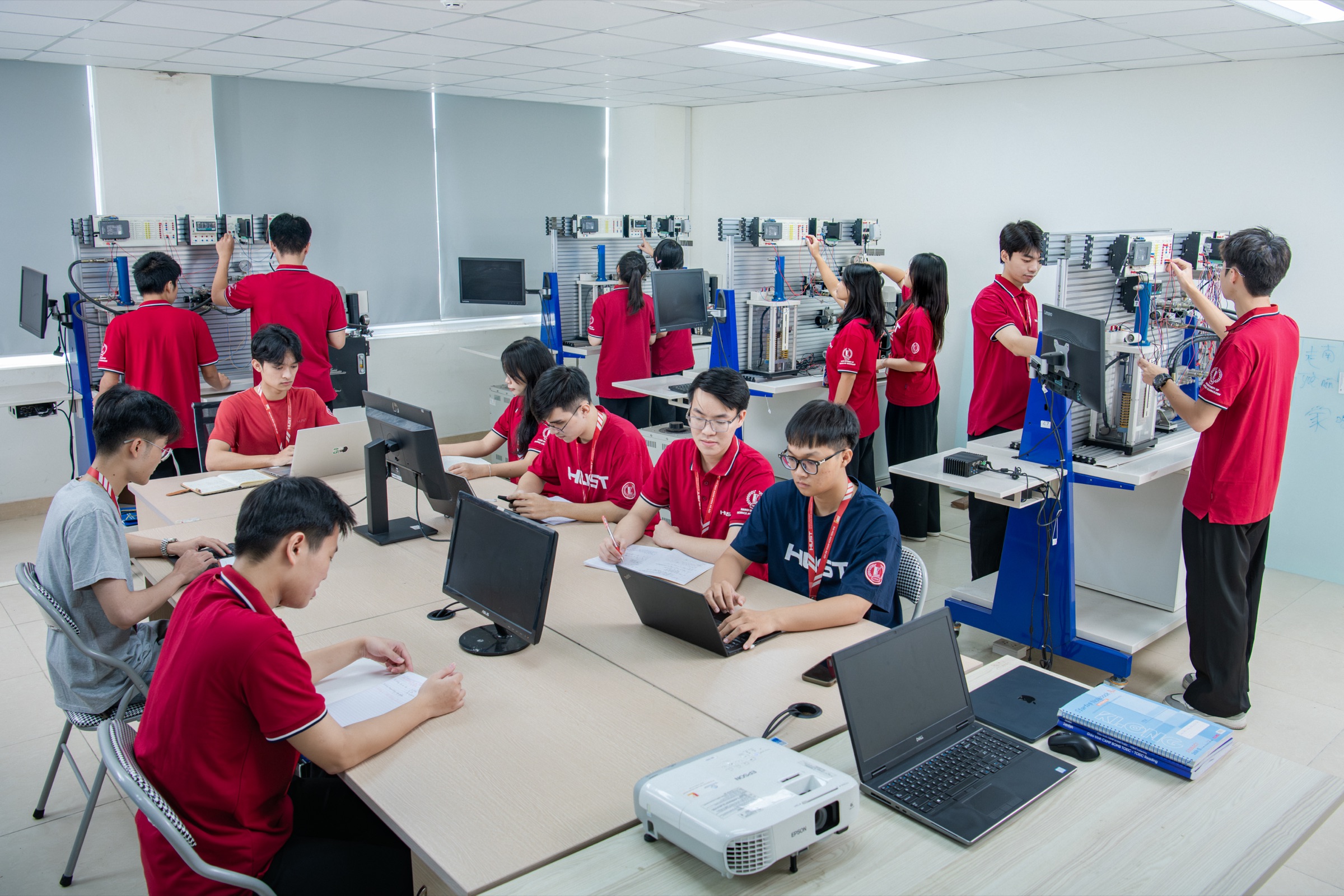

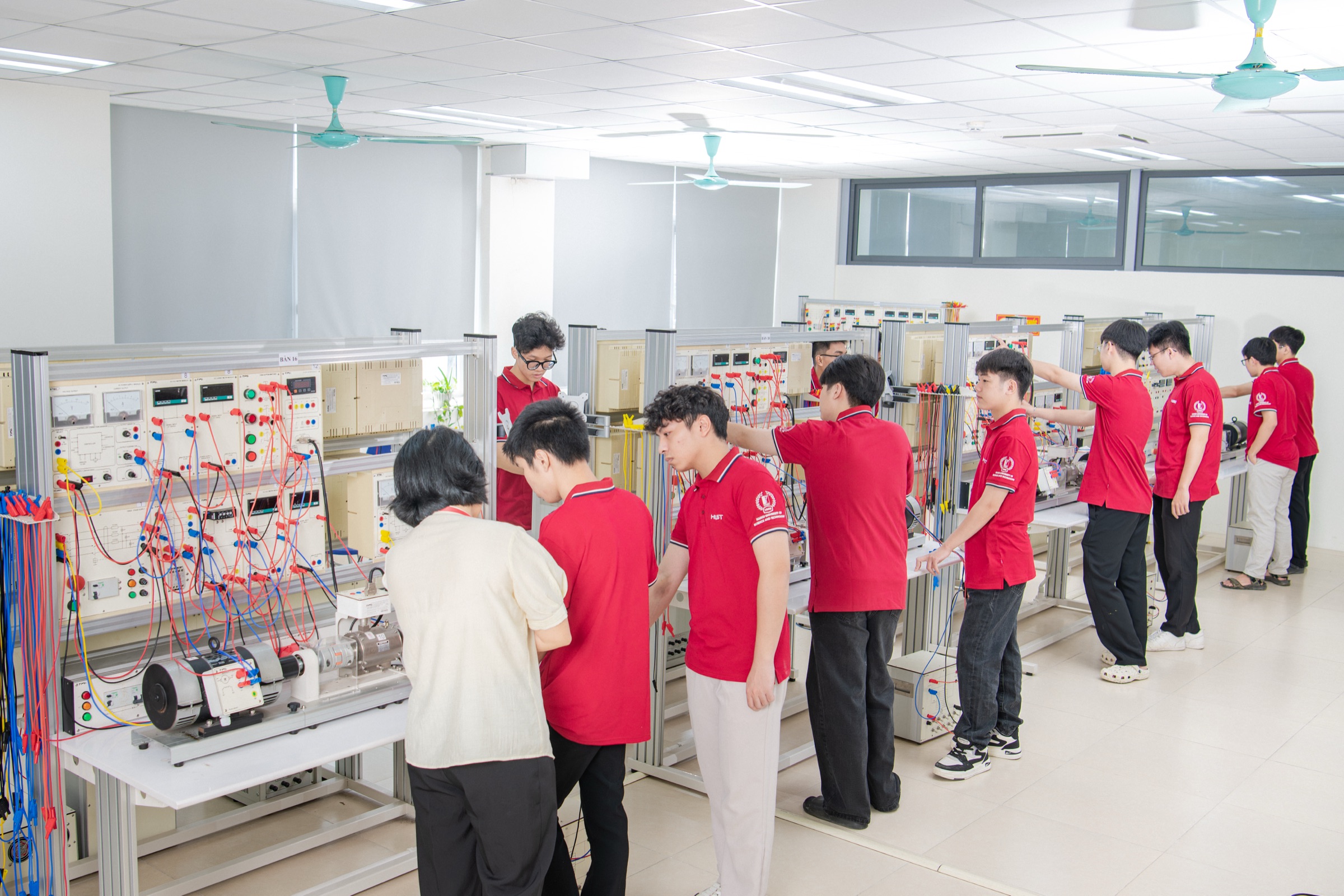

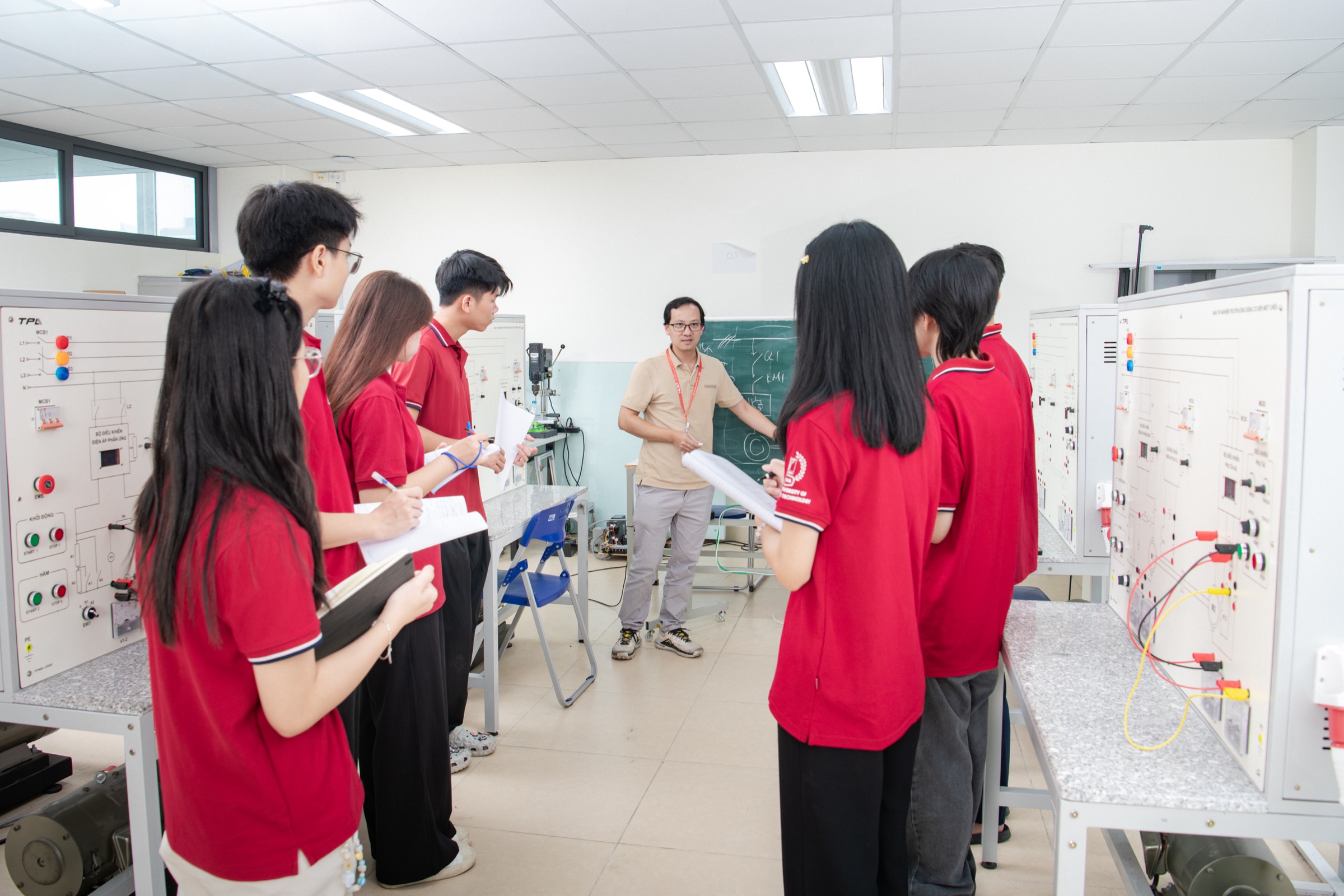
The School of Electrical and Electronic Engineering trains bachelors, professional engineers, masters and doctors in Electrical Engineering, Automation, Electronics, Telecommunications and Biomedical Engineering across 29 programs. The programs are designed to modern standards following the CDIO approach, built on an educational philosophy of solid knowledge and professional and soft skills developed through practice and projects. 9 bachelor programs and 2 master programs are internationally accredited by the reputable organisations AUN-QA, ASIIN and CTI.
Experiential learning to become engineers with solid foundational knowledge, refined skills and good attitudes — educating lifelong learners with an innovative spirit, ready to contribute and serve the community.
Educational philosophy — SEEE
Internationally accredited
11 programs recognised by reputable accreditation organisations.
 7 AUN-QA accredited programs
  3 ASIIN accredited programs
  1 CTI accredited programs
 Program framework by level
Fields & programs
Electrical Engineering covers power systems, electrical machines, electrical equipment, power electronics and renewable energy. Students gain the ability to design, operate and automate power grids, power plants and industrial equipment systems. This forms the foundation for engineering roles at power corporations, plants, and electrical-equipment and energy companies.
Control Engineering and Automation focuses on control theory, robotics, power electronics, electric drives and embedded systems. Students learn to design and operate automated systems, from industrial production lines to robots and intelligent vehicles. The program opens career opportunities in automated manufacturing, robotics, electric vehicles and smart factories.
Electronics and Telecommunications Engineering spans integrated circuit design, embedded systems and IoT, networks and wireless communications, and signal and multimedia processing. Students are trained from semiconductor components and electronic circuits to telecommunication systems and embedded software. This is a core field of the semiconductor industry, 5G/6G networks, IoT and on-device artificial intelligence.
Biomedical Engineering combines electronic engineering with medicine, covering biomedical electronic devices, biomedical signal and image processing, and biomedical informatics. Students learn to design, operate and maintain diagnostic, therapeutic and health-monitoring devices. The program meets the workforce needs of hospitals, medical-device companies and healthcare-technology research.